









Higher for Longer? Markets Reprice Interest Rate Expectations as Yield Curve Steepens
Overview
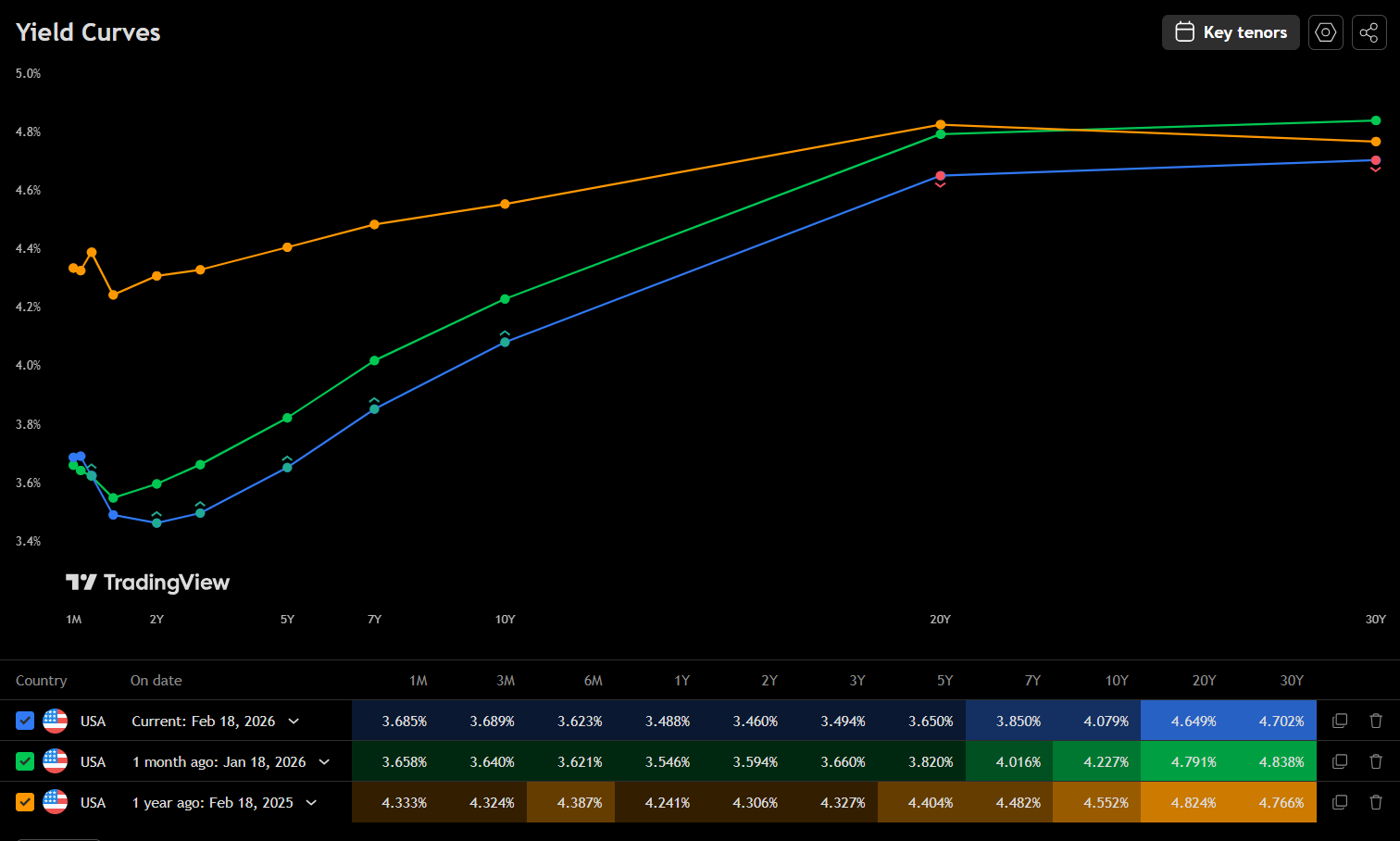
Global financial markets are increasingly focused on shifting interest rate expectations as the yield curve begins to reflect the possibility of a prolonged period of relatively elevated borrowing costs.
Recent market pricing suggests that while short-term rates have stabilized, longer-term expectations continue to move gradually higher. This development indicates that investors are becoming more convinced that central banks may keep monetary policy restrictive for longer than previously anticipated.
Such a shift has broad implications for currencies, commodities, and equity markets, as interest rate expectations remain one of the primary drivers of global capital flows.
What the Yield Curve Is Signaling
The latest pricing across government bond markets shows a gradual rise in expected rates across longer maturities, particularly in the 5-year to 30-year segment.
This pattern highlights three important themes:
1. Inflation Risks Remain Persistent
Markets appear cautious about the speed at which inflation may return to long-term targets. Structural pressures—including wage growth, energy volatility, and supply-chain adjustments—continue to support elevated long-term yield expectations.
2. Central Banks Likely to Stay Cautious
Rather than aggressive rate cuts, policymakers are expected to maintain restrictive financial conditions until inflation is clearly under control. This reinforces the “higher for longer” narrative that has dominated market expectations in recent months.
3. Growth Expectations Remain Relatively Stable
A steepening yield curve can reflect confidence that economic activity will remain resilient, even under tighter financial conditions. Investors appear to be pricing a scenario of moderate growth rather than severe recession.
Impact on Financial Markets
Oro
Rising yields tend to increase the opportunity cost of holding non-yielding assets such as gold, which can create short-term downward pressure. However, geopolitical risks and long-term inflation concerns may continue to provide underlying support.
Currencies
Currencies associated with higher interest rates often remain supported, particularly against lower-yielding counterparts, as capital flows seek better returns.
Renta variable
Equity markets may experience increased volatility as valuations adjust to higher discount rates. Growth-oriented sectors are typically more sensitive to these shifts.
What Traders Should Watch
In the coming weeks, several key catalysts are likely to shape interest rate expectations:
-
Inflation data releases
-
Central bank speeches and policy guidance
-
Labor market reports
-
Bond market volatility and liquidity conditions
These factors will determine whether long-term yield expectations continue to rise or begin to stabilize.
Conclusión
Current yield curve dynamics reinforce the view that the “higher for longer” environment remains a dominant theme in global markets. While investors have already adjusted to elevated rates, further repricing may continue to influence commodities, currencies, and risk assets.
For traders and investors, closely monitoring the relationship between yields, inflation expectations, and central bank communication remains essential in navigating the evolving macroeconomic landscape.
Release Date: 18 February 2026
Preparado por: Motasm Adel
Analista Senior de Mercado – OneRoyal
Descargo de responsabilidad de riesgos:
El trading en mercados financieros implica un alto nivel de riesgo y puede no ser adecuado para todos los inversores. La información proporcionada en este artículo es solo para fines educativos e informativos y no debe considerarse asesoramiento de inversión ni una recomendación para comprar o vender ningún instrumento financiero.

Materias Relacionadas

El oro mantiene un soporte clave mientras los mercados esperan el próximo catalizador

Análisis del Mercado: 28 de mayo de 2026 - El mercado ha decidido que las malas noticias son meramente “calidad de carácter”